
“You Can’t Replace Journalists With AI Models”: RSF’s Clayton Weimers on America’s Press-Freedom Slide
As local newsrooms vanish and algorithms flood our feeds, RSF’s Clayton Weimers warns that America’s press freedoms are eroding—and that saving them means fighting for journalism itself.

By Stan Berteloot, Interview recorded Sept. 10
The United States often introduces itself through the First Amendment. Yet on the 2025 World Press Freedom Index, it sits at No. 57 out of 180 countries, a middling rank for a nation that teaches constitutional rights in grade school. “In 2025, the United States is ranked 57th out of 180 countries,” Clayton Weimers, executive director of Reporters Without Borders (RSF) USA, told me. “It’s been a steady backslide for the past decade.”
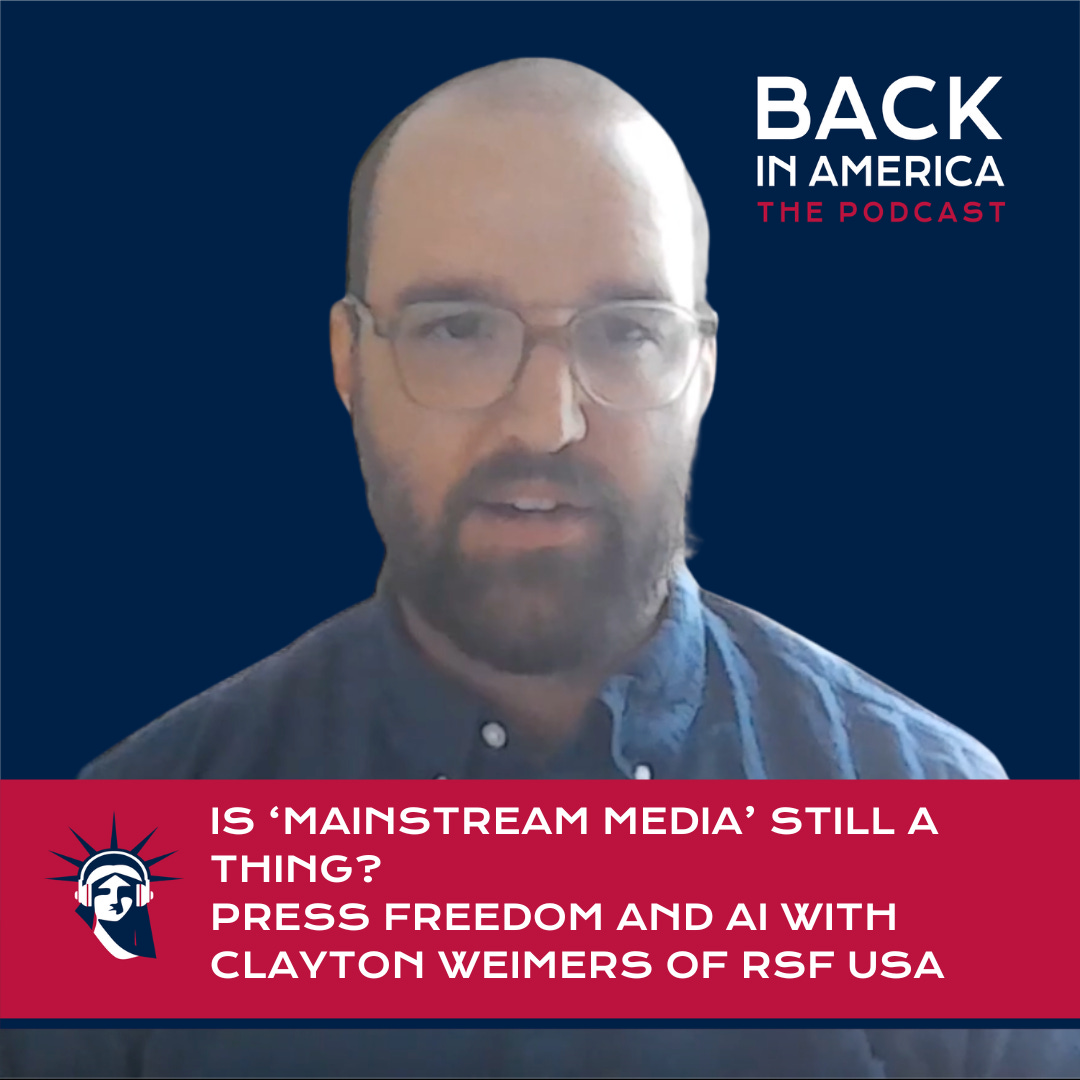
Weimers isn’t waving his arms about cable shout-fests. He’s talking about the foundations that let reporters do the job and let people actually get real news. “We measure press freedom across five different indicators, economic, political, legal, social, and safety… on all five indicators, the US has seen a steady decline over the past decade.”
The paradox: infinite feeds, vanishing news
You can drown in headlines today and still not know what happened at last night’s school board meeting. “Today 70 million Americans live in what we call news deserts,” Weimers said, pointing to the collapse of local outlets and the layoffs that have thinned what remains. The result is a democracy running on fumes. “At the end of the day, that’s what really matters… ordinary citizens [being able to] access reliable information.”
Scholars have been tracking this hollowing-out for years, warning about “ghost newspapers” and communities with little or no original reporting.
When local coverage disappears, the vacuum fills fast, and not with standards. “Unfortunately, you’re probably gonna go to Facebook, and what we know is that you’re more likely to encounter false information… and the result is a poorly informed populace which is bad for our democracy.”
The “mainstream media”? Which mainstream?
Even the labels have slipped. “I think the term mainstream media is probably an anachronism at this point… Most people are getting their information on Facebook or TikTok. So is the mainstream media social media now?” He added, “We live in a very fractured media environment… I would be hard-pressed to give you a good definition of what the mainstream news media is these days.”
That fragmentation shows up in the polling. Americans still worry about threats to press freedom, but partisan views now swing with the White House. In April, Pew reported that concern levels remained high, while party attitudes “flipped” compared with 2024.
The AI test: augment, don’t replace
Weimers isn’t anti-tech. He’s practical. “AI is a huge opportunity for journalism… sifting through massive amounts of data… [and] helping executive teams fine-tune their product to better reach their audiences.” The rule he won’t budge on: “You can’t use AI to replace the work that human journalists are doing. You can use AI to augment the work that human journalists are doing.”
We’ve already seen what happens when publishers skip the guardrails. “The second you try to replace them with AI models… You get a scandal like Sports Illustrated publishing AI content under a fake author.”
Money, power, and the cost of settling
Weimers is blunt about industry responsibility. “If you’re not willing to be in the business of defending press freedom, you shouldn’t be in the news business at all.” He worries that deep-pocketed media conglomerates are ducking frivolous legal threats because a court fight is messy PR. “For the broader values of press freedom… It’s disastrous.” The message to small outlets, which face their own bullies at the local level, is grim.
What policy can still fix
Some fixes are sitting on the Hill. “There’s the PRESS Act, which would create a federal shield for reporters and their sources… That would make it much easier for confidential sources and whistleblowers to talk to journalists without fear of government intimidation or government surveillance.” He also backs efforts to curb commercial spyware, tools that often target reporters.
Weimers knows some ideas are heavier lifts, like “a digital tax on AI systems that would fund journalism… on the polluter pays rationale.” He’s realistic about Congress, but notes that “this might be the time to be looking to the European Union for leadership.”
A view from the field: when a camera makes you a target
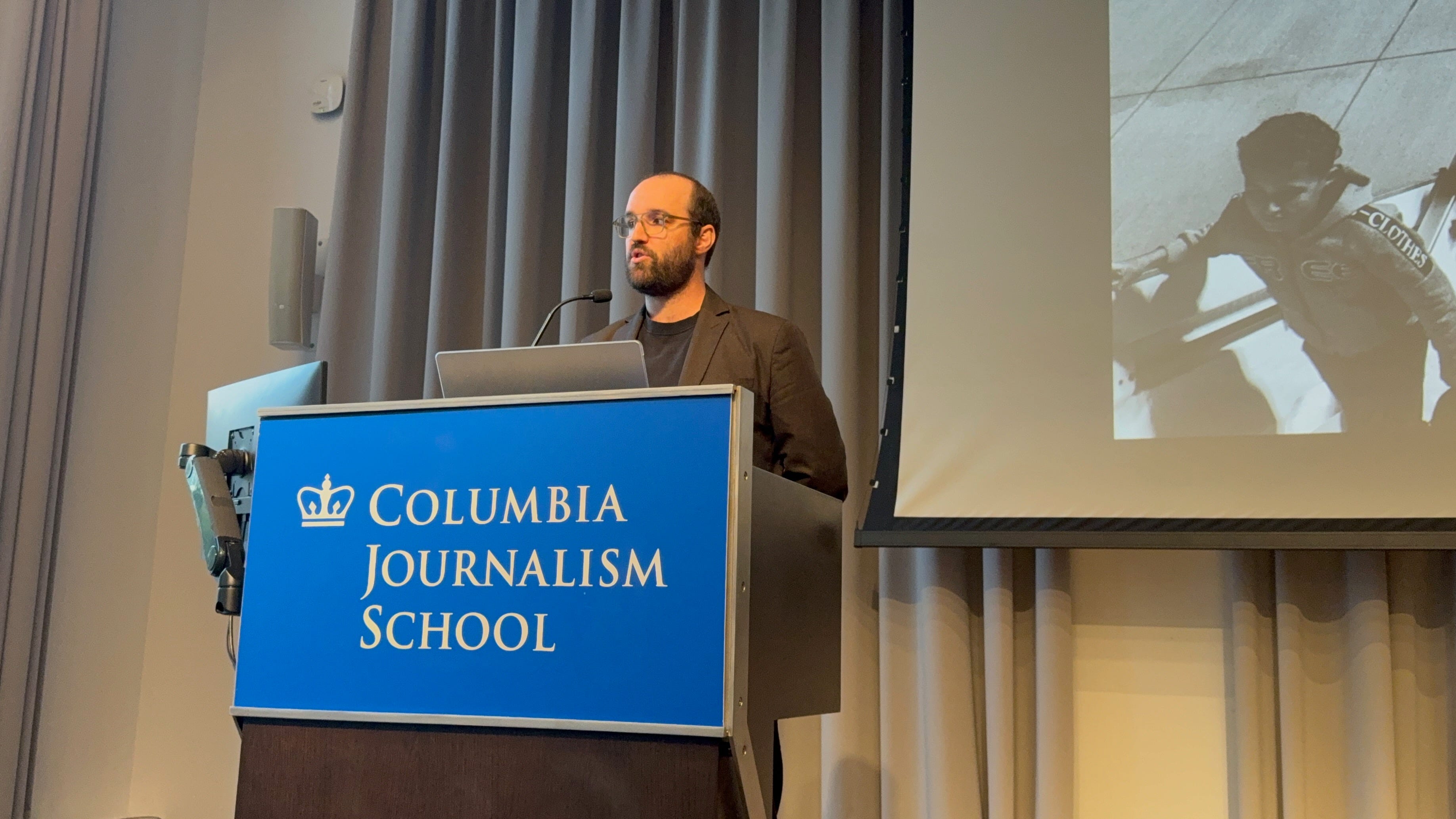
RSF turned 40 this year and marked it with a photo exhibit and panel at Columbia Journalism School. The celebration opened on a sober note. “Too often journalists doing their work are becoming targets… in Ukraine, in Gaza, and here in the United States as well,” Weimers told the audience before honoring a French photographer recently killed in a Russian drone strike. “We do this work to push back against these attacks on press freedom.” The global picture is hard to ignore: in RSF’s 2025 map, more than half the world’s population lives in places where press freedom is “very serious.”
Who keeps trust?
Trust hasn’t vanished, it’s moved. “Some of the least trustworthy people online have some of the highest ratings of trust with their audiences… They’re very skilled at building a rapport… whereas traditionally, the news media have really kept the audience at a distance.” The lesson isn’t to mimic influencers; it’s to show your work. “The format is not what matters. What matters are the processes… If you are verifying facts… being transparent about the work you’re doing and who’s paying for it, you’re doing journalism.”
That applies to podcasters, newsletters, TikTok explainers, and the paper that still lands on the porch. “You can do journalism on TikTok… on the radio… on TV… in a newsletter… The format is not what matters.”
What keeps him up at night
“To be honest… I sleep just fine,” he joked, before getting serious. “We are only at the tip of the iceberg here in terms of the crackdown on the free press… We simply can’t take our rights for granted anymore. We need to fight for them.”
He sees reasons for vigilance beyond U.S. borders, from harassment campaigns against reporters in Guyana to targeted online abuse of women journalists across the Americas. The playbook is familiar: use power to starve outlets, bully reporters, and flood the zone with noise.
Advice, and a reminder
If you want to help, Weimers keeps it simple: “We can certainly start by going to rsf.org… and if you feel so compelled… donate… The only thing that limits our ability to fight for press freedom is the resources that we have… I can’t ask for more time, but I can ask for more money.”
For would-be reporters, the pep talk is honest. “It’s a hard job… Chances are you’re not gonna make a lot of money… But for the people who do it, they can’t imagine doing anything else.” Start small. “There’s no better way to get your feet wet… than to go work in a rural community, a small-town paper, or a small-town television station and really learn how to report a story.”
Press freedom in America isn’t guaranteed by slogans or by size. It’s earned every day, close to home. Weimers puts it in plain English: “America is a promise… We can always make this country better… After what was basically a hundred years of expansion of press rights… we are now experiencing the first contraction of press rights.” The fork in the road is clear enough. “It’s really up to all of us to decide: is this a blip in our historical record or is this the new trend line?” RSF, he added, will work to “make it the shortest blip we can.”
Sources:
World Press Freedom Index 2025: over half the world’s population in red zones https://rsf.org/en/world-press-freedom-index-2025-over-half-worlds-population-red-zones
Americans remain concerned about press freedoms, but partisan views have flipped since 2024 https://www.pewresearch.org/short-reads/2025/04/24/americans-remain-concerned-about-press-freedoms-but-partisan-views-have-flipped-since-2024/
Revitalizing America’s News Deserts https://progressive.org/magazine/revitalizing-americas-news-deserts-pickard/